

The Importance of Proper Summer and All-Season Tires
Having the right tires in good condition is essential for safe, smooth driving – especially in a four-season climate like Spokane. Using proper summer and all-season tires (with correct sizing and ratings) can dramatically affect your vehicle’s handling, braking, and longevity.
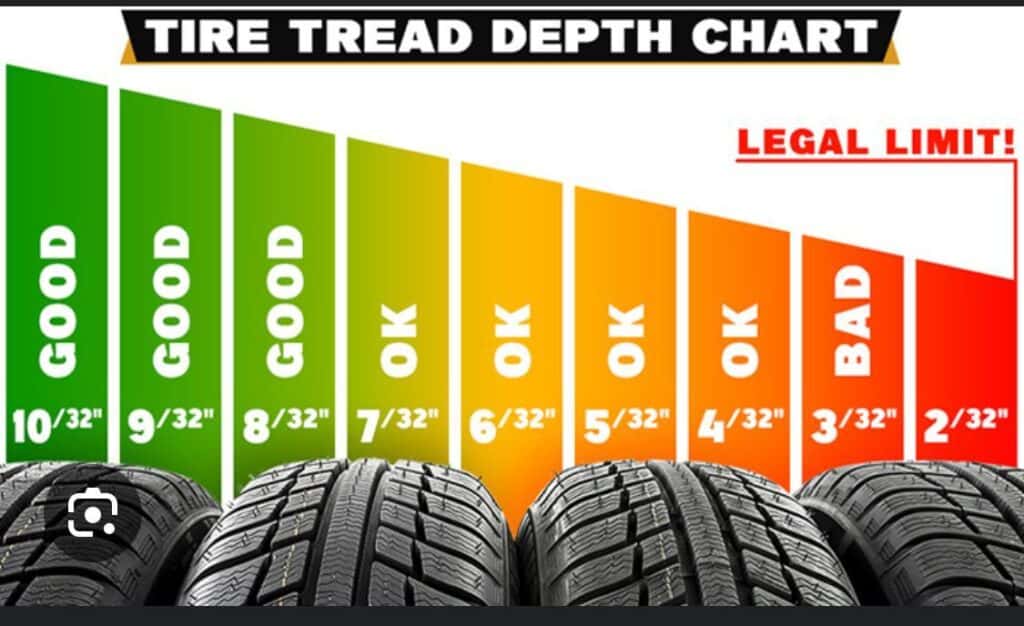
How Tire Size, Tread Wear & Load Ratings Affect Driving
Using the correct tires for your vehicle isn’t just a suggestion – it’s a safety requirement. Several tire factors can make or break your driving experience:
- Improper Tire Sizing: Tires that are too large or small for your car can throw off its handling and stability. They may rub against fenders or strain your suspension, and they can even confuse modern ABS and traction systems. In fact, incorrect tire sizes can impair steering, braking, and overall stability.Tires that don’t match your manufacturer’s specs may also wear out faster or risk tire failure due to undue stress.Always stick to the recommended size – it ensures proper load capacity, ride comfort, and won’t mess up your speedometer or computer systems.
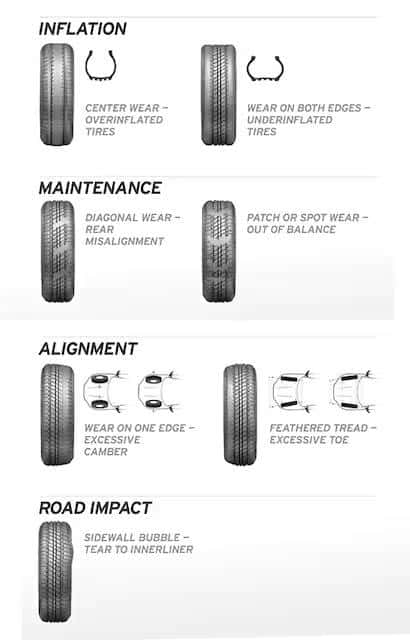
- Uneven Tread Wear: If your tires have one side or area more worn than the rest, it can cause vibrations, pulling, and reduced traction. Uneven wear often results from poor alignment, lack of rotations, or improper inflation. The outcome is not just noise or a rough ride – it means less grip on the road when you need it. Uneven tire wear can lead to significant noise, vibration, and handling issues in any vehicle. For example, tires cupped or worn on one edge can make the car shimmy or the steering wheel shake at highway speeds. Plus, uneven wear shortens tire life, forcing early replacement (costing you money sooner).
- Wrong Load Ratings or Mix-Matched Tires: Tires are rated for how much weight they can safely carry. Using a tire with a load index that is too low for your vehicle (or mixing tires with different load ratings) is a serious hazard. An underrated tire may overheat and blow out under the vehicle’s weight or during hard use.On the other hand, using a much higher load rating than needed isn’t dangerous, but it can make the ride stiffer or harsher due to a stiffer sidewall The key is to never go below the manufacturer’s recommended load rating.Also, avoid mixing tire types or sizes on the same vehicle – inconsistent grip or responses on each wheel can make the car unstable during cornering or braking.To ensure safety and predictable handling, use the proper load-rated, same-size tires on all wheels, and replace tires in full sets or pairs on an axle.
The Importance of Tire Rotations and Wheel Alignments
Routine tire rotations and four-wheel alignments are simple maintenance steps that have big benefits for your tires and driving quality. Neglecting them can lead to drivability problems and extra costs down the road.
Tire Rotations: Rotating your tires means moving them to different positions (front-to-back, side-to-side in a pattern) so that they wear evenly. Front tires often wear faster (especially on front-wheel-drive cars or heavy SUVs common in Spokane Valley), so rotations spread the wear out. This prevents one or two tires from going bald while others still have tread. The NHTSA recommends rotating tires roughly every 5,000 to 8,000 miles (or as your vehicle manufacturer specifies)
Regular rotations help maintain balanced traction and can extend tire life, saving you money. Failing to rotate not only causes uneven wear but can also lead to tire failures – the NHTSA warns that poor tire maintenance (like not rotating) can lead to flats, blowouts, or even tread separation on the highway. In short, rotations are a cheap insurance to get the most out of your tires and keep your car’s handling even and predictable.
Wheel Alignments: Hitting potholes on Spokane streets or curbs can knock your wheels out of alignment. When alignment is off, your car may pull to one side, the steering wheel might vibrate or be off-center, and your tires will wear unevenly (for instance, inner or outer edges wearing out faster). A four-wheel alignment adjusts your suspension angles (toe, camber, caster) to factory specs. This not only keeps the car tracking straight, but also ensures tires contact the road at the proper angle so they wear evenly.
Most manufacturers recommend an alignment at least once a year, and certainly do one whenever you install new tires or if you notice alignment symptoms. The cost of an alignment is far lower than the cost of prematurely ruined tires or repairing suspension parts. In fact, driving with chronic misalignment can cause premature wear on suspension and steering components (like ball joints, tie rods, bushings). Over time, that can lead to “play” in the steering or even damage (one case study showed a driver ignored alignments and ended up with bent control arms and tie rods – an expensive repair). Bottom line: check your alignment bi-annually and anytime you feel the car pulling or see uneven tread wear. It improves ride quality and safety and prevents your tires from scrubbing themselves bald on one side.
Worn Tread Depth = Longer Stopping Distances (With Stats)
When it comes to stopping your car, tire tread depth is a make-or-break factor – especially on wet roads. As tires wear down, they lose the deep grooves that channel water away and grip the pavement. The result? Longer stopping distances and higher risk of skidding or hydroplaning. Let’s look at the numbers:
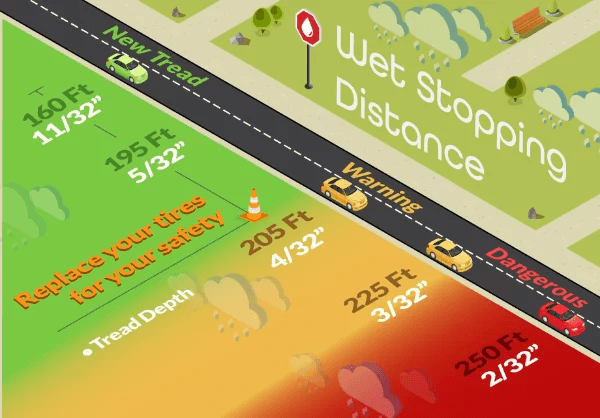
Wet stopping distance increases significantly as tire tread wears down. For example, a tire with full tread (around 10/32″ deep) might stop in ~160 feet on a wet road, but at half-worn (5/32″) it needs ~195 feet, and at 4/32″ (the warning level) about 205 feet. At the legal minimum of 2/32″, it can take roughly 250 feet to stop on wet pavement.
Multiple studies confirm this sharp decline in braking performance. In one tire test, new tires (around 10/32″ tread) stopped from 70 mph in about 195 feet, while tires worn to 4/32″ took about 290 feet – roughly 50% farther. With near-bald tires at 2/32″, stopping distance nearly doubled to a frightening ~379 feet in the wet. That can be the difference between a close call and a fender-bender (or worse). Another study found that compared to new tires, those at 4/32″ tread depth increased wet stopping distance by 43%, and by 2/32″ it shot up by 65%.
The traction loss is exponential as tread wears out. This is why many experts and tire shops in Spokane and Liberty Lake actually recommend replacing tires once they reach 4/32″ of tread – even though the legal minimum is 2/32″. At 4/32 your wet grip is already greatly reduced.
Pushing tires to the legal limit might squeeze a few more miles out of them, but you’re severely compromising safety, especially in rain or snow. The takeaway: check your tread depth (use a gauge or the penny/quarter test) and don’t wait until it’s bald. Replacing tires at 3 or 4/32″ remaining can keep your stopping distances within a safer range and help you avoid collisions on slick roads.
Bad Tires or Alignment Can Damage Other Car Components
Driving on worn-out tires or with the vehicle out of alignment doesn’t only put your tires at risk – it can cause collateral damage to other parts of your car, leading to higher repair bills. Here are a few examples:
- Increased Suspension Wear: Your tires and suspension work as a system. If tires are bald or unevenly worn, they don’t absorb road shocks evenly, which can transmit extra stress to suspension components (shocks, struts, springs, bushings). Mechanics note that badly worn tires can increase strain on suspension parts.Essentially, instead of the tire’s rubber tread flexing and gripping properly, a bald tire might cause more impact to transfer to the suspension. Over time this can contribute to premature wear of shocks and struts (leading to bouncy rides or poor control). It’s a vicious cycle too – worn shocks can then cause tires to wear in a cupped or scalloped pattern. Keeping good tread on your tires ensures your suspension doesn’t have to “pick up the slack” of traction loss.
- Stress on Wheel Bearings and Axles: Tires that are out of balance or uneven can cause vibration. That constant vibration at certain speeds can strain wheel bearings and even axle joints. If your car has a persistent shake due to tire issues (or misalignment), those vibrations are transmitted through the hub to other components. Over time, you might end up with a humming wheel bearing or other parts that need replacement. Rotating tires and fixing alignment early prevents those vibrations from ever starting.
- Drivetrain Strain (AWD systems): Many Spokane and Post Falls drivers use all-wheel-drive vehicles (especially in winter). AWD systems can be sensitive to differences in tire circumference. If you neglect rotations, one pair of tires might wear significantly more than the other, meaning they have a smaller diameter. This can force your AWD differentials to work extra hard (as if you’re constantly turning slightly) and can lead to overheating or failure of AWD components. Replacing a center differential or transfer case is far more expensive than a set of tires! So, by rotating and keeping even tread, you avoid damaging the AWD system. Generally, if tires are mismatched in wear by more than 2/32–3/32, it’s recommended to replace all four to protect the drivetrain.
- Fuel Economy and Braking System: When alignment is off or tires are underinflated/worn, the engine works harder to overcome the increased rolling resistance or drag. This means you burn more fuel. It might not “damage” the engine per se, but it does lighten your wallet over time. Also, if tires have uneven grip, your brake pads and ABS may engage unevenly as well – for instance, a tire with almost no tread may lock up or trigger ABS sooner than one with good tread, causing asymmetrical brake wear or longer stops that overheat brakes.
In summary, neglecting tire and wheel maintenance can cascade into other costly repairs. Misalignment, for example, not only chews up tires but can wear out suspension and steering parts, as evidenced by cases of drivers needing tie rods and control arms replaced simply due to prolonged misalignment.
Bad tires can strain the suspension and reduce the effectiveness of safety systems. It all adds up to more downtime at the shop and more money out of pocket. It’s far cheaper and easier to take care of your tires than to fix multiple components later.
Preventing Premature Tire Failure and Avoiding Costs
All the issues above point to a common theme: preventative maintenance is key. By taking care of your tires and wheels, you can prevent most premature failures and steer clear of surprise expenses. Here’s a quick recap of how proper tire and wheel care saves you money and hassle:
- Longer Tire Life: Regular rotations, proper inflation, and alignment can extend tire lifespan significantly. That means you buy new tires less often. Tires are not cheap (especially quality all-season or performance summer tires), so getting, say, 50,000 miles out of a set instead of 30,000 is a big win. It might be the difference of an extra year or two before you spend $600-$800 on new rubber.
- Avoided Blowouts/Accidents: Replacing tires before they’re dangerously worn out and keeping them in good shape helps you avoid blowouts on I-90 or a scary hydroplaning incident on a rainy Spokane day. Avoiding even a minor accident saves you an insurance deductible and potential injury. It also avoids the hidden costs of accidents (like higher insurance premiums or the time your car is in for bodywork).
- Protecting Other Parts: As noted, a small investment in an alignment (often ~$100 or sometimes free checks at dealerships like Spokane Hyundai) can save you hundreds in suspension repairs. Rotating tires (often free at tire shops or during oil changes) prevents uneven wear that could lead to early tire replacement or AWD drivetrain fixes. By keeping everything in balance, you reduce wear and tear across the board.
- Better Fuel Economy: Properly maintained tires (correct pressure, alignment, balance) roll easier. Even a few percent improvement in fuel economy adds up when gas isn’t cheap. Over the life of the tires, you could save a nice chunk of gas money – effectively paying back the cost of a tire rotation or two.
In essence, tire and wheel maintenance is an investment that pays for itself. It prevents the “domino effect” of one problem leading to many. A well-maintained set of tires also maintains your vehicle’s resale value – no one wants to buy a car that has unevenly worn tires and a shaky ride (it’s a red flag that other maintenance was neglected). Whether you drive a Hyundai sedan in Spokane or an SUV through Liberty Lake and Post Falls, taking care of your tires will keep your car running safely and efficiently, and keep your hard-earned money in your pocket.
Spokane Hyundai Expert Tips on Tire Maintenance
In our Ask the Spokane Hyundai Experts series, our certified technicians often get questions about how often to service tires and what best practices to follow. Here are some expert recommendations from the Spokane Hyundai service team to help you stay on top of tire care (and stay safe on the roads):
- Rotate Tires Frequently: Our experts recommend rotating your tires with every oil change or at least every 5,000–7,500 miles, whichever comes first. This follows industry guidelines to rotate around the 6k mark for even wear. Regular rotations ensure each tire serves in each wheel position, promoting uniform wear and maximizing tread life.
- Check Alignment Twice Yearly: We advise getting a four-wheel alignment at least once a year. In Spokane, after a harsh winter or after any big pothole hits, it’s wise to check alignment in spring. If you notice the car drifting or your steering wheel isn’t centered, don’t wait – get an alignment check Spokane Hyundai offers a free alignment inspection with our service visits. Correct alignment boosts tire longevity and ensures your car drives straight and true.
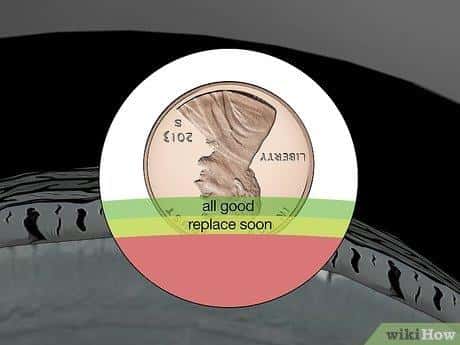
- Monitor Tread Depth and Condition: Make it a habit to inspect your tire tread depth every few months. You can use a tread depth gauge or the penny test (if you see the top of Lincoln’s head, it’s below 2/32″ – time for new tires). Don’t wait until slick: as mentioned, consider 4/32″ your warning to start shopping for new tires, especially heading into the wet season. Also, check for any uneven wear patterns or damage (cuts, bulges, nails). Catching a problem early can allow a repair or alignment to fix the cause before the tire is ruined.
- Maintain Proper Tire Pressure: Underinflated or overinflated tires wear out faster and can hurt fuel economy. Check your tire pressure monthly (including the spare) and set it to the PSI recommended on your driver’s door placard. Temperature swings in the Spokane area can change tire pressure by several PSI, so fall and spring are key times to adjust pressures. Proper inflation also ensures the tire’s load rating and performance are as intended.
- Use Seasonal Tires Appropriately: If you have dedicated summer tires, remember to swap them out once temperatures regularly drop below ~45°F. Summer tires get hard in cold weather and won’t grip well (plus they can crack). Use winter tires or all-season tires during Spokane’s cold months. Conversely, if you ran winter tires, switch back to all-seasons or summers in spring to prevent excessive wear. All-season tires are a great year-round solution for most Spokane, Liberty Lake, and Post Falls drivers, but if you do switch sets seasonally, always install the full set of four and re-check your pressures and alignment with each changeover.
- Balance and Inspect: Whenever you rotate or re-install tires, have them balanced and visually inspected. Tire balancing stops vibrations that can cause uneven wear. Our Spokane Hyundai service techs will also inspect the brakes and suspension while the wheels are off – giving you peace of mind that everything is in good shape.
Following these best practices from the Spokane Hyundai experts will ensure your tires wear evenly and perform optimally. It also means you’ll be far less likely to experience a tire-related breakdown or accident. As we like to say, “Happy tires make a happy car!”
Quality Tires and Free Inspections For All Makes and Models at Spokane Hyundai
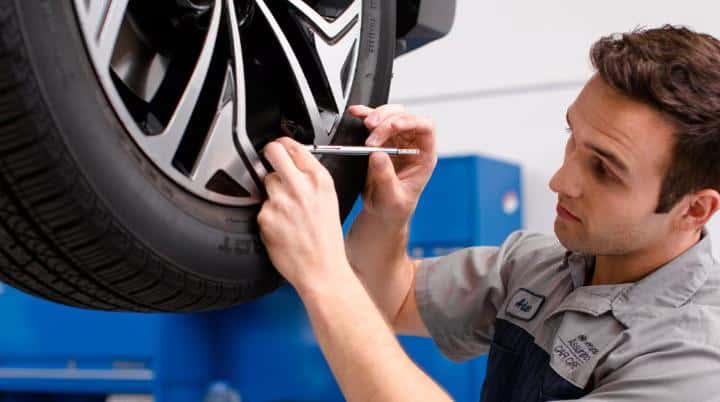
One more reason to stay on top of tire maintenance: Spokane Hyundai offers a full selection of tires for all makes and models, not just Hyundai. We carry all major brands – whether you need robust all-season tires for your SUV, high-performance summer tires for your sports sedan, or even winter tires for the snow, we’ve got you covered. Our dealership frequently runs tire sales and promotions, so you can get the right tires at a competitive price. (Ask about current tire specials – you might find deals like buy 3 get 1 free, rebates, or price match guarantees.)
Importantly, our factory-trained technicians can mount and balance your new tires with state-of-the-art equipment and perform a free alignment check to protect your tire investment. We serve customers from Spokane, Post Falls, Liberty Lake, and beyond – anyone in the Inland Northwest looking for expert tire service is welcome here.
If you’re unsure about your tires’ condition or need guidance on what tires are best for your driving needs, contact Spokane Hyundai. We’re happy to inspect your tire tread depth and alignment at no charge and give honest recommendations. It’s all about keeping you safe on the road. Remember, something as simple as a tire rotation or pressure check today can prevent a blowout or costly repair tomorrow.
In conclusion, proper tire and wheel maintenance is not just about avoiding inconvenience – it’s about safety, performance, and saving money in the long run. By using the correct summer or all-season tires in good condition, and keeping up with rotations and alignments, you ensure your vehicle drives its best. You’ll stop quicker in emergencies, glide more smoothly on I-90, and protect your car’s suspension and drivetrain from unnecessary strain. Before your next road trip around Spokane or daily commute through Liberty Lake and Post Falls, take a moment to check those tires! And if you need any help or a professional eye, Spokane Hyundai is here for you with quality tires, expert service, and free tire and alignment inspections. Drive safe and see you on the road!
| Book Service Appointment | Shop Tires | View Service & Parts Specials |
0 comment(s) so far on The Importance of Proper Summer and All-Season Tires