

How Tariffs Could Affect Hyundai Vehicle Prices – And Why Now Might Be the Time to Buy
U.S.-Assembled Hyundais vs. Imports from Korea and Mexico
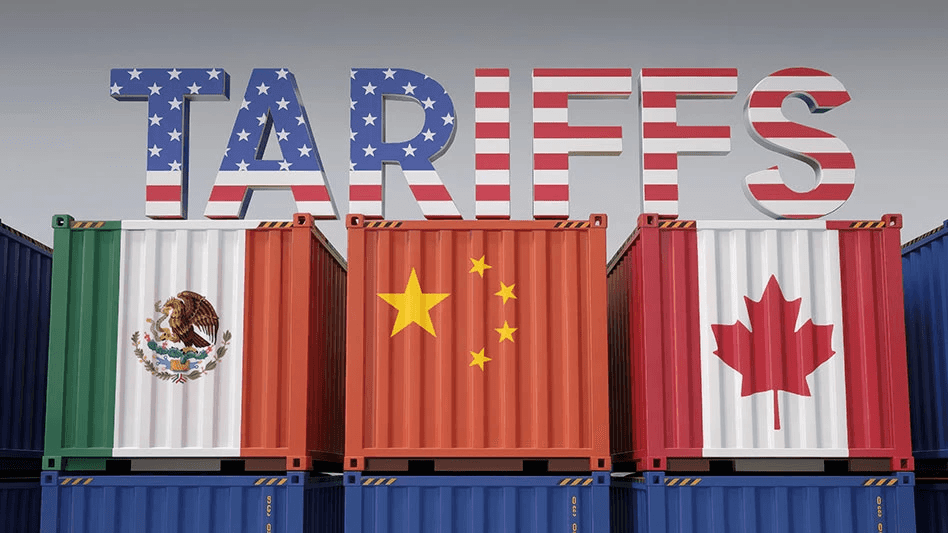
Hyundai manufactures several popular models right in the United States, which insulates those vehicles from import tariffs. At its plant in Alabama, Hyundai builds models like the Santa Fe and Tucson SUVs, the Santa Cruz compact pickup, and even the Ioniq 5 AWD Electric SUV. These U.S.-assembled vehicles would not face a direct import tax if new auto tariffs are imposed on foreign-built cars. In contrast, some Hyundai models are produced overseas – for example, the Palisade SUV and certain sedans come from South Korea, and a smaller share have been assembled in Mexico. However, Hyundai’s exposure to Mexico is quite limited: only about 5% of Hyundai’s global sales are tied to Mexican-made exports. This means relatively few Hyundai vehicles would be directly hit by a U.S. tariff on Mexican imports. In fact, analysts estimated that the proposed 25% tariffs on Mexico and Canada would impact Hyundai compared to many rivals (For context, Ford and GM rely on Mexico for 9% and 12% of their sales, respectively. In short, because Hyundai already builds many cars in America or sources them from South Korea (with which the U.S. has a free trade agreement), the direct effect of tariffs on Hyundai’s vehicle prices is expected to be limited.
A Global Supply Chain That Crosses Borders
Even for models built in the U.S., modern car manufacturing is a global enterprise – parts often criss-cross international borders multiple times before final assembly. The North American auto supply chain is highly integrated thanks to trade agreements like NAFTA (and its successor, USMCA). Factories in the U.S., Mexico, and Canada ship components back and forth routinely. For example, a wiring harness or transmission module might be partially assembled in Mexico, sent to the U.S. for further work, then return to Mexico again before the finished part comes back to a U.S. assembly plant. This means a single car part can cross the border several times during production. If tariffs are enacted, parts imported from Mexico or Canada would face extra costs each trip across the border, adding expense even to “American-made” cars. In fact, one economic analysis found that these tariffs could raise manufacturing costs by $4,000 to over $10,000 per vehicle for U.S-built models, depending on how many imported components they contain . Automakers might try to blunt the impact by stockpiling parts or shifting production of certain components, but it’s hard to avoid all the added expense. Most experts anticipate that consumers would see higher vehicle prices if broad tariffs take effect – estimates range from about a 6% increase to around $3,000 extra per vehicle on average. In short, tariffs on imported parts could drive up costs for all automakers, though Hyundai’s U.S.-built models might still fare better than models fully built abroad.
Limited Direct Impact on Hyundai – Thanks to Production Locations
The good news for Hyundai shoppers is that the company’s manufacturing footprint helps shield it from the worst of these tariff threats. Hyundai Motor Group has long served the U.S. market with a strategy of local production and diversified sourcing, rather than relying entirely on imports. Its Montgomery, Alabama plant produces hundreds of thousands of vehicles per year, covering key models in high demand. Additionally, Hyundai has factories in South Korea and Mexico, but Hyundai’s reliance on Mexican production is minimal compared to many competitors. Because of this, industry analysts project Hyundai can absorb the proposed North American tariffs. Hyundai’s limited exposure means the direct tariff cost per vehicle would also be relatively small for its lineup. For instance, a tariff on a fully imported Korean-built Hyundai (such as the Palisade) would theoretically raise its price, but those models might not be the primary target of current tariff plans – recent proposals have focused on Mexico and Canada. If a broader, universal import tariff were imposed (a less certain scenario), Hyundai would feel more pain. But under the likely tariff scenarios being discussed now, Hyundai isn’t in the direct line of fire as much as automakers who import a large share of their inventory from Mexico or Europe. In practical terms, this means Hyundai buyers might see smaller price hikes from tariffs than buyers of some rival brands – or possibly no immediate increase at all for U.S-built Hyundai models.
Checking the Window Sticker for Origin and Parts Content
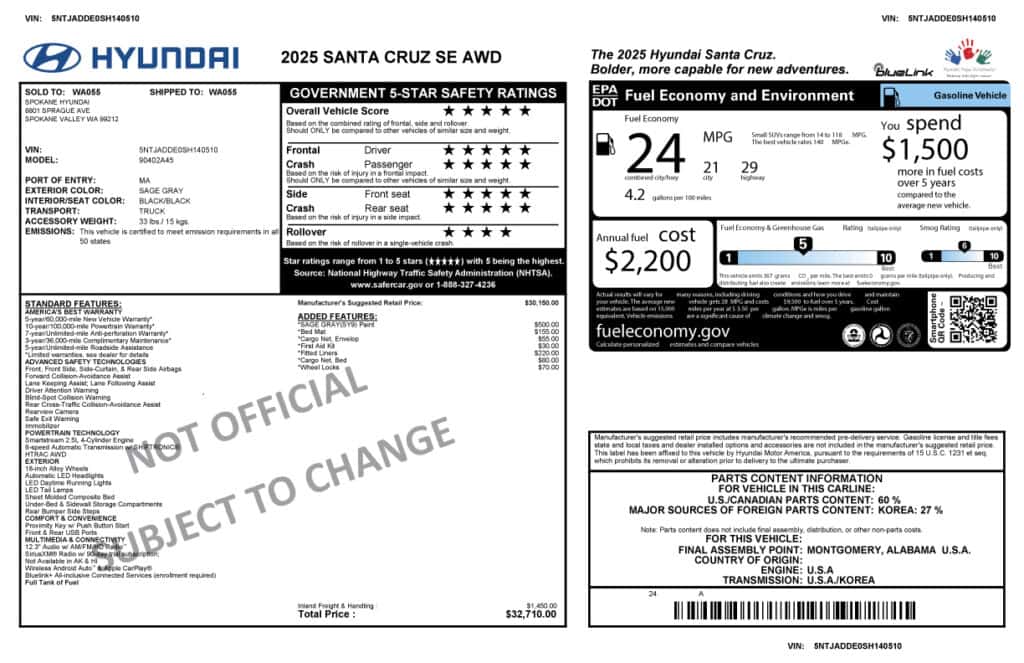
For consumers curious about where a specific car is built (and how tariffs might affect it), the answer is literally stuck to the window. Every new vehicle sold in the U.S. has a Monroney label, or window sticker, that includes a section called “Parts Content Information.” This section tells you the final assembly location of the vehicle, the percentage of its parts sourced from the U.S. and Canada, and the major sources of other parts. It will name any country that contributes more than 15% of the parts content and even list the origin of the engine and transmission. Shoppers can use this to gauge how much of a car is “made in America” versus imported. For example, if you’re eyeing a Hyundai Sonata and the sticker shows it was assembled in Alabama with 50% U.S./Korean parts, you can be confident a tariff on Mexican-built cars won’t directly impact that particular vehicle’s price. On the other hand, if a model’s label shows final assembly in Korea and a low U.S. parts percentage, its price could be more vulnerable to any future broad import taxes. Checking the Monroney label is a quick way to see a car’s country of origin and parts mix, so you can understand how trade policies might (or might not) affect it before you buy. Window Stickers are Available on all new Hyundai at Spokane Hyundai.net and instore.
Buy from Current Inventory to Avoid Tariff Risks
One important thing to remember about tariffs: they only hit vehicles that are imported (or built) after the tariff goes into effect. Any new tariff would not retroactively apply to cars already on dealer lots or in transit. That means the current inventory of Hyundai vehicles in the U.S. is tariff-free under existing rules. Spokane Hyundai has a healthy supply of vehicles on their lots “right now, the levies are not affecting dealer lots” at all. In other words, the cars sitting in our showroom today were produced and priced before any new tariffs, so their cost isn’t inflated by those potential taxes. For consumers, this creates an opportunity: by purchasing an in-stock vehicle, you can essentially lock in a price that doesn’t include future tariff costs. If you wait and tariffs do get implemented, the next shipments of cars might come with higher costs that could be passed on to buyers. Some buyers have already caught on to this dynamic – when tariff threats made headlines, most dealers saw a surge of interest from shoppers looking to “avoid any tariff-related price hikes” by buying sooner. It’s a classic case of “buy now or pay more later.” Of course, nothing is certain – if tariffs are averted, there’s no tax-related urgency. But with the current uncertainty, purchasing a Hyundai from today’s inventory can act as insurance against tomorrow’s price increases.
Market Conditions Are in Buyers’ Favor
Tariffs aside, it’s worth noting that the overall car market in early 2025 has shifted to favor consumers in many ways. After a couple of years of supply shortages and sky-high prices, inventory has rebounded. The average new-car transaction price has even dipped slightly recently. Industry data also show new car prices are down about 2% from their peak in late 2022. This easing of prices comes as factory output improves and more cars are available on dealer lots. With more supply available, Spokane Hyundai and Hyundai USA are also ramping up incentives and discounts to attract buyers. Manufacturer incentive spending (think cash rebates, discount financing, etc.) is now at its highest level since 2021, incentive offers have roughly doubled compared to a year ago. What does this mean for a Hyundai shopper? You will now find more generous rebates, dealer discounts, or special lease deals. Even low APR finance deals are back – With Hyundai bringing back 2.99% for 72 months and 0% for 60 months on select models. Many experts describe today’s market as a buyer’s market Below are a few key factors making now a potentially smart time to buy:
- Ample Inventory & Choice: Spokane Hyundai has more cars in stock now than a year ago, easing the pressure on buyers. More inventory means better selection and pricing or throw-in deals to move cars.
- Stabilizing Prices: New car prices have leveled off after years of increases. The average price paid for a new car has even ticked down in recent months .
- Big Incentives: Automakers are now spending more on incentives to win customers. The latest data show incentive spending at a 3+ year high. For buyers, this translates to cash rebates, dealer discounts, and promotional financing that can knock thousands of dollars off a car’s price. Spokane Hyundai is keen to keep sales growing, offering bargains that weren’t around even months ago.
- Favorable Financing Options: Interest rates for auto loans are still elevated overall, but Spokane Hyundai and Hyundai Motor Finance are bringing back special financing offers. 0% APR loans or low-rate financing for certain terms are increasingly available again for well-qualified buyers. These deals can save you a lot in interest compared to the high rates from banks or credit unions in recent months. In short, it’s getting cheaper to finance a new car, but taking advantage now locks in a good rate.
- Tariff Uncertainty: Lastly, the looming tariff situation adds a wrinkle: if tariffs are enacted later this year, some new vehicles could suddenly get more expensive (analysts predict several thousand dollars per vehicle on average in added cost. Those extra costs might also force automakers to pull back on incentives for affected models – after all, if they’re paying new taxes, they have less room to offer discounts.
Buying before any tariffs hit ensures you avoid those potential price hikes and benefit from today’s discounts. It’s a way to “future-proof” your purchase against policy shocks.
Expert Insights: Why Acting Soon Makes Sense
Market analysts and auto experts generally agree: given the current mix of factors, it’s an opportune moment for serious car shoppers to consider pulling the trigger. “Now is a great time to buy a car,” one Kelley Blue Book report declared in, citing the improving supply and competitive pricing. The same report warned that “a new president’s tariff threats could spark significantly higher prices” later on, and that today’s favorable credit conditions may not last. Today’s car buyers have more leverage and savings opportunities than at any time in the past two to three years.
Of course, you should buy a car on your own timeline and need, not just because of external pressures. If you don’t truly need a vehicle, there’s no sense in rushing due to tariff headlines. As one consumer guide put it, “don’t let the news cycle convince you to buy a car you don’t need” . However, if you plan to purchase a new vehicle in the near future, the current window is uniquely attractive. With prices softening, deals aplenty, and the tariff wildcard on the horizon, acting sooner rather than later could save you money and stress. In the words of Kelley Blue Book’s analysts: “if you know you’ll need to buy a car soon, it makes sense to act fast” . This way, you can drive home your new Hyundai with confidence that you got a great price – and avoid any surprises that the next wave of tariffs or market changes might bring.
0 comment(s) so far on How Tariffs Could Affect Hyundai Vehicle Prices – And Why Now Might Be the Time to Buy